
Composite vs Wood Decking for Minnesota Winters
Composite and wood decking both work in Minnesota, but they age differently under about 51 inches of snow and a wet spring each year. Composite skips the yearly staining and resists moisture; wood costs less up front but needs refinishing to survive the climate. The choice comes down to how much maintenance a homeowner wants to trade for a lower starting price. Either way, the frame and the 42-inch frost footings underneath decide how long the deck lasts, not the board on top.
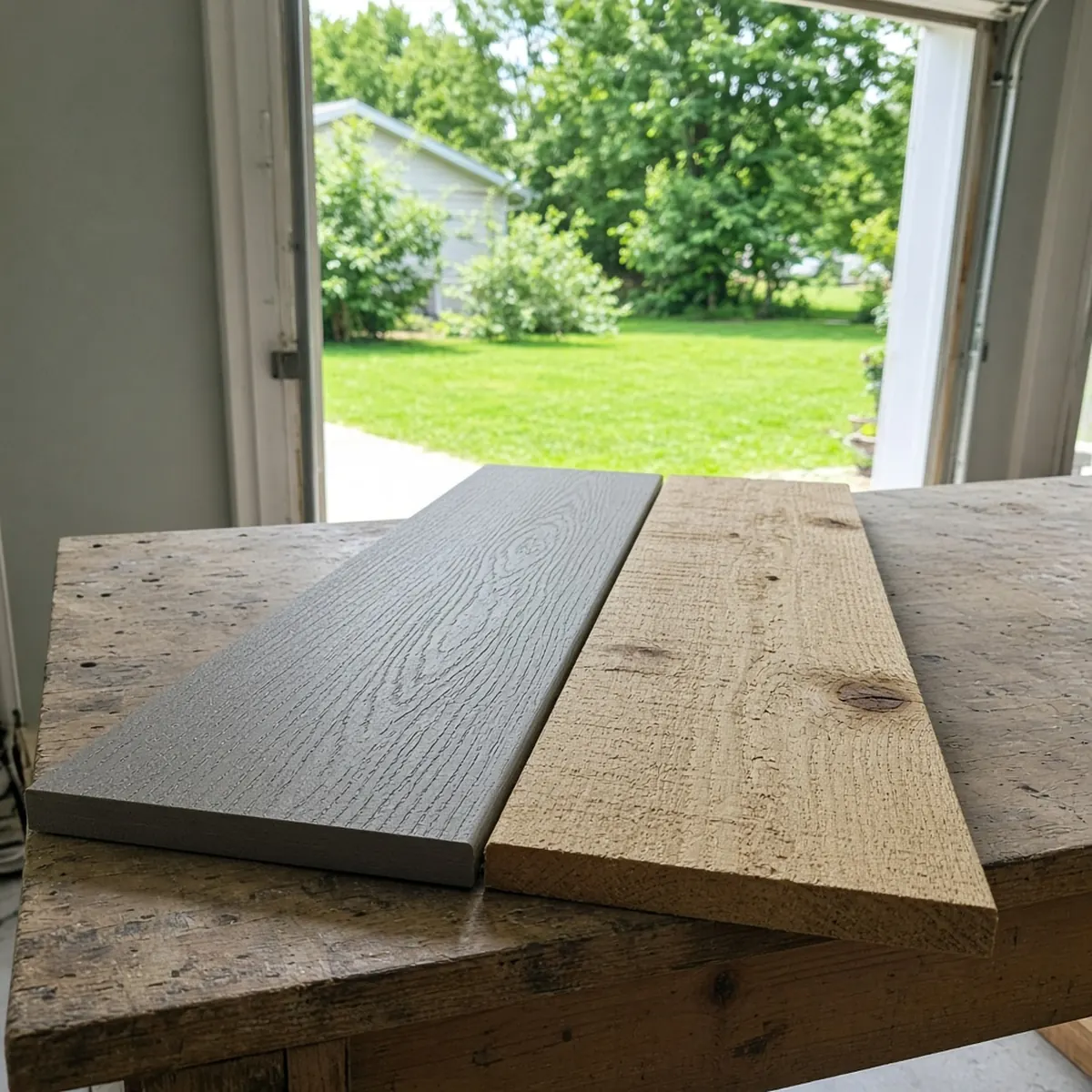
The Short Answer
Choose composite if you want to stop sealing a deck every year and are willing to pay more up front. Choose wood if a lower starting price matters more and you do not mind staining every year or two. Minnesota's snow-packed winters and wet springs are hard on bare wood, so composite's maintenance edge is larger here than in a dry climate. The frame is the same under both.
How Each Handles the Minnesota Climate
Wood and composite react differently to the freeze-thaw and the months of snow cover that define a Maple Grove winter.
| Factor | Pressure-treated wood | Capped composite |
|---|---|---|
| Yearly maintenance | Stain or seal every 1–2 years | Wash; no refinishing |
| Moisture resistance | Absorbs water, can cup and check | Polymer cap sheds water |
| Snow handling | Fine; clear with care | Fine; use a plastic shovel |
| Up-front cost | Lower | Higher |
| Service life on a sound frame | Shorter, upkeep-dependent | Longer, low-upkeep |
| Look | Natural wood grain | Uniform, fade-resistant |
The nearest official station, Minneapolis–St. Paul International Airport, records about 31.6 inches of precipitation and 51 inches of snow a year under NOAA's 1991–2020 normals. That moisture is what punishes an unsealed wood deck and what composite is built to ignore.
Where Wood Still Makes Sense
Wood still makes sense when the up-front budget is tight or when a homeowner wants the natural grain and is willing to maintain it. Pressure-treated pine is the lowest-cost surface, and cedar offers natural rot resistance and a warmer look. Both take stain, so the color is adjustable. The trade is the recurring work: a Minnesota wood deck needs cleaning and resealing every year or two to hold off cupping, checking, and graying. Skip that upkeep and wood ages fast in this climate.
Where Composite Wins
Composite wins on maintenance and longevity in a climate that keeps decks wet and snow-covered for months. Capped composite wraps a wood-plastic core in a polymer shell, so it does not absorb water, rot, or need refinishing, and it carries a long warranty against fade and stain. The cost is higher at install, and composite needs joists spaced tighter than some wood decks, commonly 16 inches on center or less. Over the deck's life, the lack of yearly upkeep is what pays that back. See composite decking for how it installs.
The Part That Matters More Than the Board
The decking surface gets the attention, but the frame and footings decide how long any deck lasts in Maple Grove. A composite surface on a frame with shallow footings still heaves every winter, and a wood deck on proper 42-inch footings outlasts a composite deck on bad ones. Whichever board a homeowner picks, the structure underneath has to be built on footings below the frost line and framed for the snow load. The board is a maintenance-and-looks decision; the frame is the durability decision. Call 763-298-9416.
Frequently Asked Questions
Composite is better for low maintenance and longevity in Minnesota, while wood is better for a lower up-front cost and a natural look. The state's snow-packed winters and wet springs are hard on bare wood, which needs staining every year or two, so composite's maintenance advantage is larger here than in drier climates. Both perform well on a frame built with 42-inch frost footings; the board choice is about upkeep and looks, not structure.
Quality capped composite does not crack in Minnesota cold the way some early uncapped composites could, because the polymer cap resists moisture that would otherwise freeze inside the board. Composite does expand and contract with temperature, so installers leave gaps for that movement. Clearing snow with a plastic shovel rather than a metal blade protects the cap. On a properly spaced frame, composite handles the freeze-thaw without cracking.
A wood deck in Minnesota needs cleaning and resealing about every one to two years to hold up against the wet springs and snow cover. The exact interval depends on sun exposure, the product used, and how much weather the deck takes. Skipping the upkeep lets the wood cup, check, and gray faster in this climate. Homeowners who do not want that recurring work choose composite instead.
Composite decking is not meaningfully more slippery than wood in snow when it carries a textured grain surface, which most capped boards do. Any deck, wood or composite, gets slick under packed snow or ice, so clearing it matters more than the material. Using a plastic shovel and avoiding metal blades keeps a composite surface from scratching while clearing it.
A deck can mix composite and wood, and many do: a composite surface on a treated wood frame is the standard build. Some homeowners also use composite for the decking and wood for the railing, or the reverse. The frame is almost always treated lumber regardless of the surface, because the frame carries the load and sits on the frost footings. The mix is a looks-and-budget choice.
Call Now to Choose the Right Deck in Maple Grove
To talk through composite versus wood for a deck in Maple Grove, MN, call 763-298-9416. See composite decking or deck builders in Maple Grove for the full range of deck work. Call 763-298-9416.